Anil Kumar Chanda (1906–1976) was one of the most distinguished personalities to emerge from Silchar. His career spanned literature, administration, politics, and constitutional governance during the formative decades of independent India.
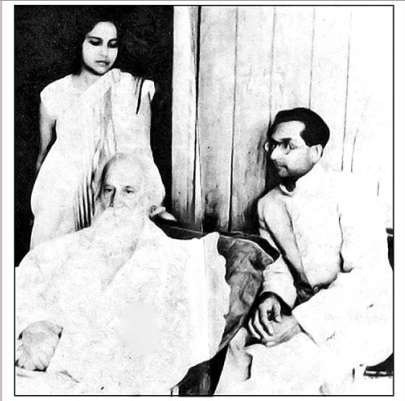
Born in Silchar on 23 May 1906 to Kamini Kumar Chanda and Chandraprabha Chanda of the prominent Chanda family of Silchar, he was the younger brother of the renowned freedom fighter Arun Kumar Chanda. Growing up in a culturally vibrant environment that valued education and intellectual pursuits, Chanda developed an early inclination toward scholarship and public service.
He studied at the London School of Economics and Political Science. In the 1920s, he became closely associated with Rabindranath Tagore at Santiniketan, where he served as Tagore’s personal secretary. This experience exposed him to global intellectual and cultural networks and helped shape his outlook on education and public life.
Chanda later joined the prestigious Indian Civil Service (ICS), one of the most competitive administrative services of the time. After India’s independence, he entered parliamentary politics and was elected to the Lok Sabha. In the government of Jawaharlal Nehru, he served as Deputy Minister in the Ministry of External Affairs. During this period, he presided over an Indian delegation that met Mao Tse-tung, the supreme leader of China, in 1955. He later worked in the Ministry of Works, Housing and Supply, contributing to governance in the early years of the republic.
In 1954, Chanda was appointed the second Comptroller and Auditor General (CAG) of India, serving until 1960. The CAG is responsible for auditing government accounts and ensuring transparency and accountability in public expenditure.
After completing this role, he became Chairman of the Third Finance Commission of India in 1960. Established under Article 280 of the Constitution, the Finance Commission recommends how financial resources, particularly tax revenues, should be distributed between the Union and the states, thereby maintaining fiscal balance within India’s federal system.
Chanda also chaired the Chanda Committee, which examined the future structure and development of broadcasting in India. The committee made influential recommendations on improving the functioning and autonomy of public broadcasting institutions such as All India Radio.
Sources-