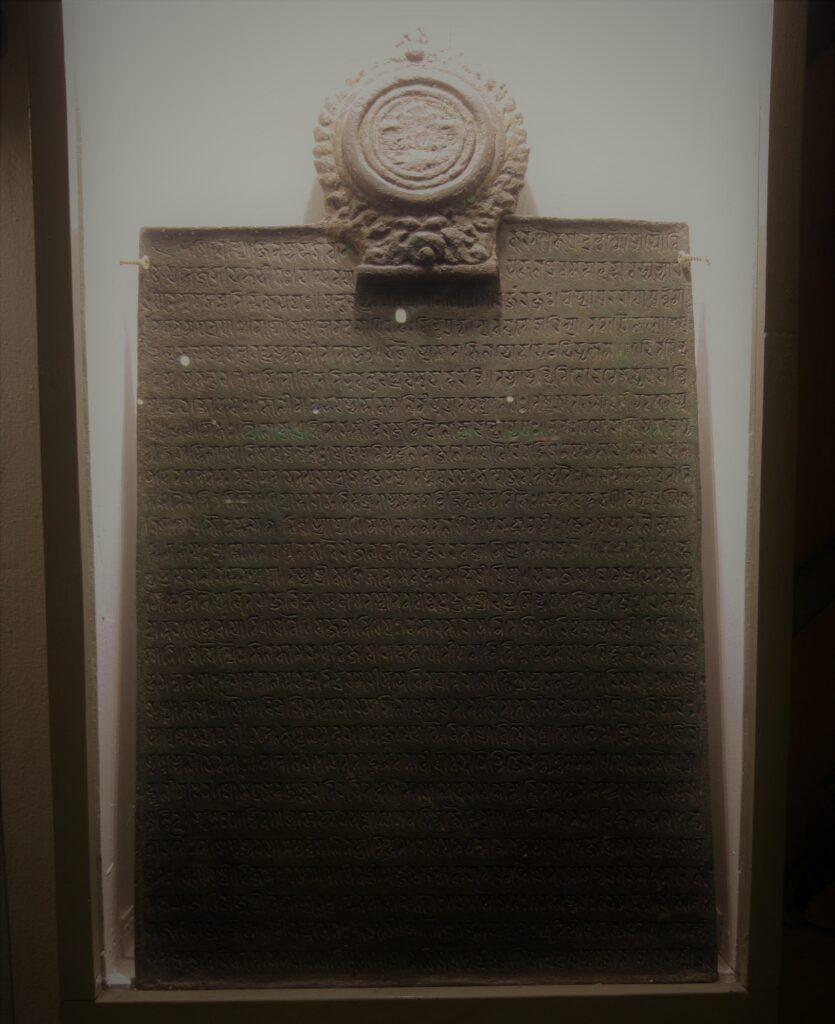
History often survives in fragments—inscriptions, ruins, and scattered references. But sometimes, a single discovery can illuminate an entire region’s past. The Paschimbag Copper Plate inscription of Maharajadhiraja Srichandra (AD 935) is one such remarkable record that offers deep insight into the early history of Barak Valley.
Issued by Srichandra, the most powerful ruler of the Chandra Dynasty of Vanga (Southeast Bengal), this inscription is far more than a royal decree. It is a document that challenges long-held assumptions and firmly places Barak Valley within the framework of an organized and thriving medieval polity.
A Kingdom, Not an Isolated Frontier
One of the most significant takeaways from the inscription is clear: the plains of Barak Valley were not isolated tribal pockets. Instead, they were under the administrative control of a unified Bengali kingdom.
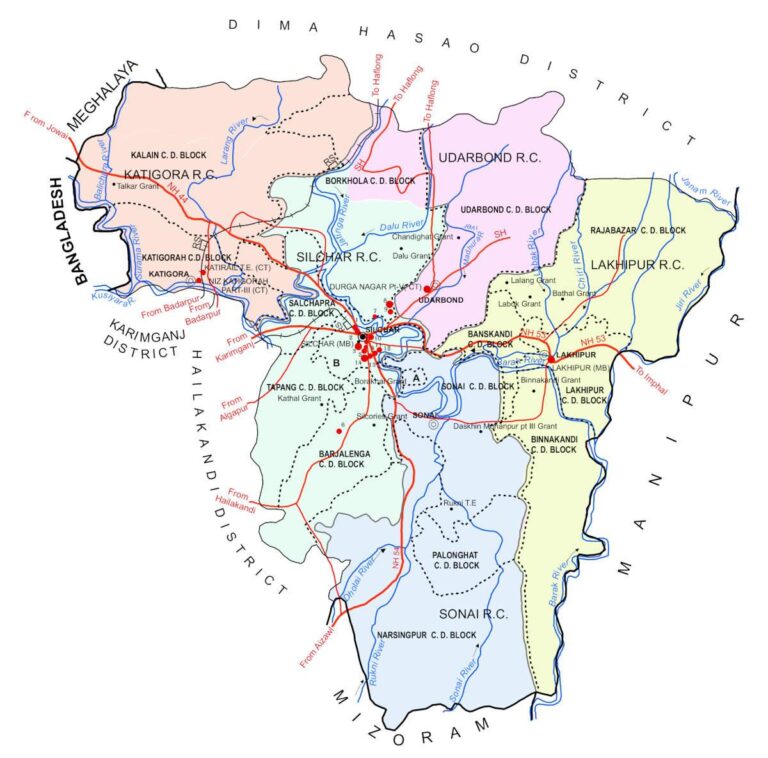
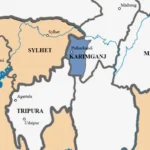
The inscription refers to the region as part of the Srihatta Mandala, itself included within a larger administrative unit known as the Pundravardhana Bhukti. This layered administrative structure indicates a high level of governance, organization, and integration.
Far from being peripheral, Barak Valley was very much connected to the political and economic systems of early medieval eastern India.
The First Clear Mention of Srihatta
The Paschimbag copper plate is especially important because it provides the first definitive reference to Srihatta (modern Sylhet region) as a distinct administrative division.
This mention of Srihatta as a Mandala shows that:
- The region had a recognized identity
- It functioned as a governed territory
- It was part of a larger state apparatus
For historians, this is a crucial marker in tracing the evolution of regional identity in both Sylhet and Barak Valley.
Kushiyara River: The Artery of Settlement
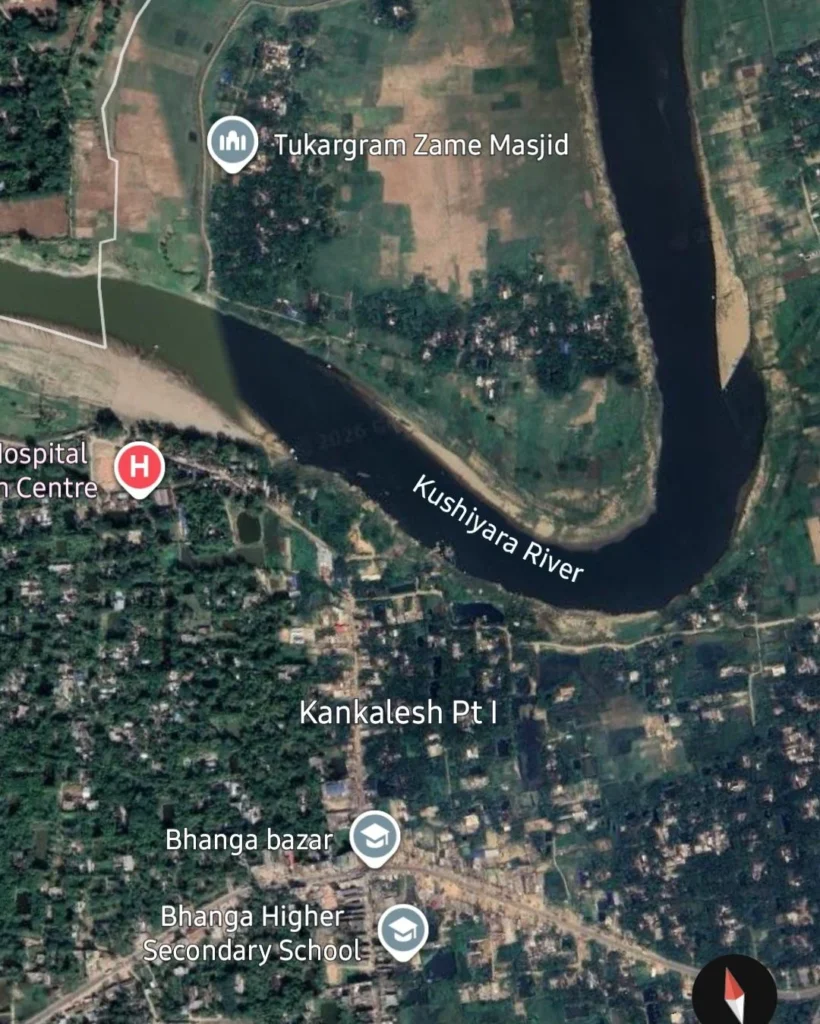
The inscription mentions land grants along the “Kosiyara-Nadi”, which corresponds to today’s Kushiyara River.
Flowing from the Barak River and passing through Bhanga Bazaar in present-day Karimganj district, the Kushiyara has long served as a natural and economic lifeline. Even today, it forms a boundary between Karimganj (India) and Zakiganj (Bangladesh).
The reference to this river in the inscription strongly suggests that early settlements in Sribhumi (Karimganj region) developed along its banks. Rivers were central to life in pre-modern societies—supporting agriculture, trade, and communication—and the Kushiyara was no exception.
Echoes of Society: Names That Still Survive
One of the most fascinating aspects of the inscription is its mention of various occupational groups involved in temple and social life.
Among them are:
- Malakar
- Karmakar
- Sutradhar
- Baidya
These are not just historical labels—they are surnames still widely found among Bengali Hindus of Barak Valley today. This continuity offers a rare glimpse into how social structures and identities have persisted across more than a millennium.
Religious Harmony Under the Chandra Kings
Although the Chandra rulers, including Srichandra, were devout Buddhists, their governance reflects a remarkable spirit of inclusivity.
The copper plate records extensive land grants to Brahmins and support for Hindu temples. Deities such as Mahakala and Agni (Vaishvanara) are explicitly mentioned, highlighting the coexistence of Buddhist and Hindu traditions.
This patronage was not merely symbolic—it played a key role in shaping the cultural and social stability of the region. It fostered a shared religious landscape that would influence Barak Valley for centuries.
Mahakal Villages: A Living Legacy
Perhaps one of the most intriguing connections between past and present lies in the Mahakal villages.
Even today, around Bhanga Bazaar and the Kushiyara River, there are seven villages named “Mahakal” (Mahakal Pt. 1–Pt. 7). This naming tradition may be directly linked to the worship of Mahakala mentioned in the copper plate.
Such continuities serve as living reminders of the region’s deep historical roots.
The Legacy of Srichandra
Srichandra ruled for approximately 45 years, and the Chandra Dynasty lasted around 150 years. During this time, they left a lasting imprint on eastern India’s political, cultural, and social landscape.
The Paschimbag Copper Plate stands as one of the most compelling pieces of evidence of that legacy. It not only documents royal authority and land grants but also captures a snapshot of life—its governance, beliefs, and communities.
📜Source:- The ASI book link :- https://ia601900.us.archive.org/20/items/in.ernet.dli.2015.56669/2015.56669.Select-Inscriptions-Bearing-On-Indian-History-And-Civilization-Vol2.pdf