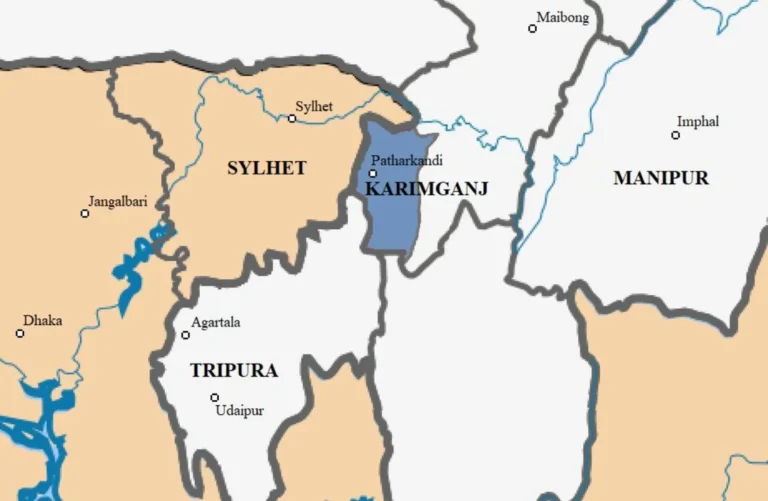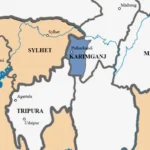
Following Tripura’s conquest of Cachar, Pratapgarh was absorbed into the Tripura kingdom. During this period of warfare, the Cachar ruler and his officer stationed in Pratapgarh were killed, creating a power vacuum. Members of the old ruling elite, Sultan Mohammad, Sirajuddin Mohammad, and Ajfar Mohammad—returned from refuge in Jangalbari and assumed authority.
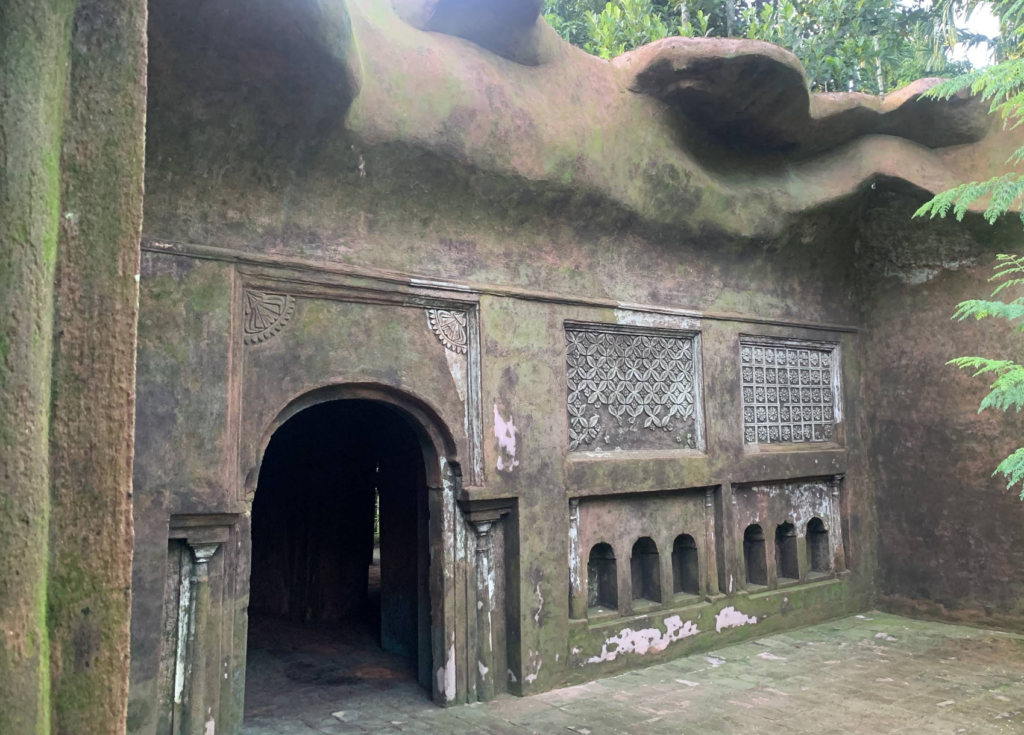
Internal rivalry soon followed. Ajfar, the youngest but most forceful, seized control, prompting conflict with Sultan Mohammad. The dispute ended with a territorial division: Sultan Mohammad ruled the northern part, while Ajfar settled separately, giving rise to the pargana later known as Jafarganj. Although questions about their legitimacy persisted, these men became recognised as the founders of the Muslim zamindar families of Pratapgarh and Jafarganj, albeit without the full sovereignty of earlier rulers.
Sultan Mohammad and the Restoration of Pratapgarh
Sultan Mohammad, popularly known as Ray Gafur, restored the abandoned capital and undertook a major hydraulic feat by diverting the course of the Langai River. By reducing the river’s excessive bends, he ensured quicker water flow to Pratapgarh. The embankment built for this purpose is still remembered as Rajar Bandh, a lasting marker of early administrative initiative in the region.
Decline and Opportunity
Over time, Pratapgarh’s fortunes waned. Under Ghulam Ali Chaudhury, the estate weakened significantly, creating conditions ripe for an ambitious outsider. That outsider was Radharaman, a man whose ascent from obscurity to power would redefine the region’s politics.
The Rise of Nawab Radharaman
Born into the Dutta lineage of Sylhet, Radharaman’s early life was unremarkable. His fortunes changed after he settled in the forested frontier of Chargola, where devotion to the local forest deity Sahija Badshah became central to his authority. Gradually, he acquired land through trade, loans, and influence over Ghulam Ali Chaudhury’s household.
After securing a legal share of Pratapgarh through a decision of the Sadr Diwani Court, Radharaman moved decisively to Chargola. There he established a fortified residence known as Kellabari, set up courts and a treasury, and began presenting himself as an independent nawab. Alliances with Kuki chiefs strengthened his military position, making him a formidable power on Sylhet’s southeastern frontier. His rise in power eventually lead to the famous Battle of Chargola (1786) against the British East India company
Sources