A Frontier Beyond the Major Powers
The history of the Karimganj (Sribhumi) region in Barak Valley is often viewed through the lens of larger and more dominant political centers, yet the region itself was once home to smaller kingdoms that played significant roles in shaping its past. Among these, Pratapgarh occupies a unique position. Unlike prosperous centers of power, Pratapgarh existed as a frontier kingdom, shaped by its geography and constantly influenced by the competing forces of Tripura, Cachar, and Bengal.
Origins: From Sonai Kasampur to Pratapgarh
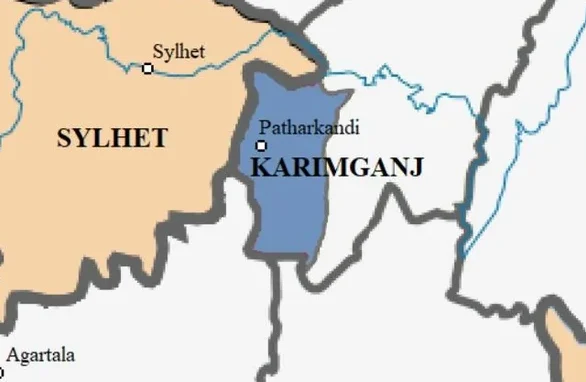
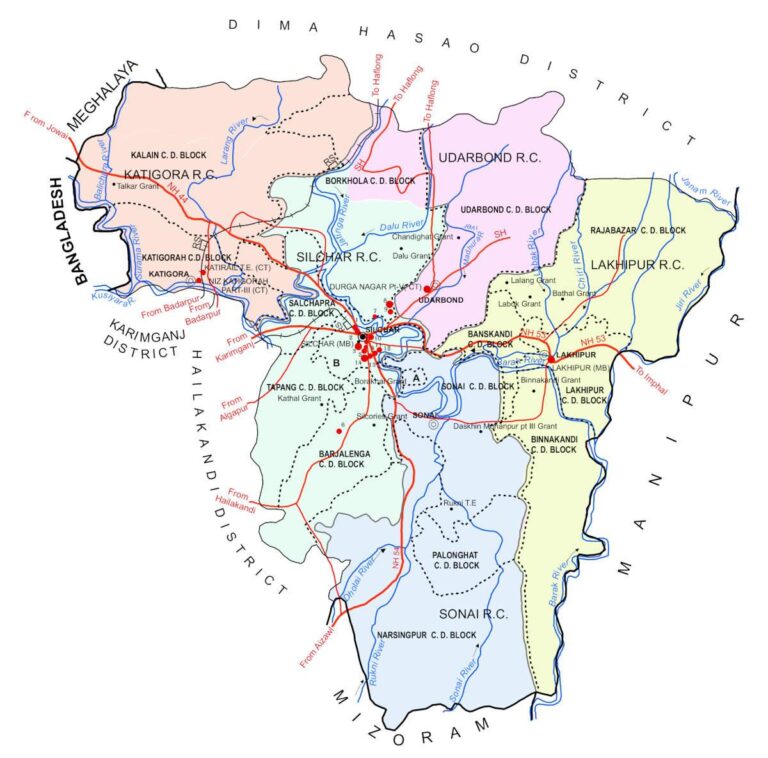
In early tradition, the region was not known as Pratapgarh but as Sonai Kasampur. The name Pratapgarh is generally attributed to a Hindu ruler named Pratap Singh, who is believed to have established his capital in this area. This account, preserved in the Assam District Gazetteer, suggests that the region had begun to emerge as a local center of authority even before its later political developments. Archaeological remains further support this idea. Across parts of present-day Karimganj, ruined fortifications and boundary markers point to an organized defensive system. At Chargola, the remains of an east–west oriented fort known as Jagannath Singh’s Garh still survive, while traces of other structures can be found in surrounding areas. Though much of this has been reclaimed by forests, these remnants indicate that the region once held considerable strategic importance.
Between Legend and Record
The early history of Pratapgarh, however, is difficult to reconstruct with certainty. Much of it is shaped by legend and oral tradition. It is commonly believed that Pratap Singh and Jagannath Singh belonged to the same lineage and lived reclusive lives without leaving heirs. After their deaths, the former capital is said to have been occupied by Amir Azfar, marking a transition in authority. Yet these accounts remain uncertain, often conflicting and lacking firm historical grounding. More reliable evidence appears only later in land-survey records, particularly from the first Istaba, which confirm the name Pratapgarh and point to the rising influence of the Malik family, whose ancestors were associated with the Dewan lineage.
The Rise of Malik Muhammad Torani
A clearer phase in Pratapgarh’s history begins in the late fourteenth century with the arrival of Malik Muhammad Torani. Associated with the political upheavals of Bengal, he migrated eastward and settled in the region. At that time, much of the surrounding territory was controlled by Pora Raja, a vassal of the Tripura kingdom. The confrontation between the two was brief but decisive. Pora Raja submitted and transferred authority, bringing an end to his own line of rule. With this, Malik Muhammad established control over the region, encouraged settlement, and laid the administrative foundations of a new political order.
Malik Pratap and the Making of a Capital
The transformation of Pratapgarh into a more defined center of power took place under Malik Pratap, the grandson of Malik Muhammad. He shifted the political center from Dewani to a forested region within present-day Karimganj, drawn by its natural landscape and strategic advantages. Strengthened by alliances with local elites, he established a permanent base there. His rule saw the construction of mosques, the renovation of earlier structures, and the excavation of large water reservoirs, most notably Rajbari Dighi. Over time, the surrounding elevated ruins came to be known as Rajbari Jungle. The presence of stone remains in the area suggests that the capital was once a place of considerable activity and craftsmanship.
Conflict with Tripura
As Pratapgarh grew in strength, it inevitably came into conflict with neighboring powers, particularly the rulers of Tripura. During the reign of Maharaja Pratap Manikya II, tensions escalated as Malik Pratap’s expansion began to challenge Tripura’s authority in the region. Internal instability within Tripura delayed a direct response, but the conflict reached a turning point around 1490 CE, when Pratap Manikya was killed in circumstances indirectly linked to Malik’s Pathan forces. In the aftermath of this shifting balance of power, Bazid emerged as the ruler of Pratapgarh.
Bazid’s Rule: Power and Submission
Under Bazid, Pratapgarh reached the height of its power. He expanded his authority, defeated the ruler of Heider Desh in Cachar, and fortified the region with defensive walls and moats. Confident in his strength, he assumed the title of Sultan, signaling a claim to independence. However, this assertion of autonomy soon brought him into conflict with the powerful Sultan Syed Hussain Shah of Bengal. By offering refuge to rebels from the Kamrup–Gour region, Bazid provoked a direct military response. The Bengal Sultanate acted swiftly, sending Sarwar Khan to suppress him. Bazid was defeated, stripped of his title, and forced to submit, leading to Pratapgarh’s incorporation into the Pathan-controlled Bengal polity.
The Fall of Pratapgarh
Although Bazid’s successors attempted to maintain control, the kingdom had already begun to decline. The final blow came during the reign of Aftar Uddin Khan, when conflict with Cachar erupted once again. After the death of the Cachar king in battle, Queen Kamala led a powerful retaliatory campaign against Pratapgarh. Despite resistance, the kingdom could not withstand the assault. The capital was destroyed, the ruling family was largely annihilated, and the region fell under the control of Cachar.
A Kingdom Lost to Time
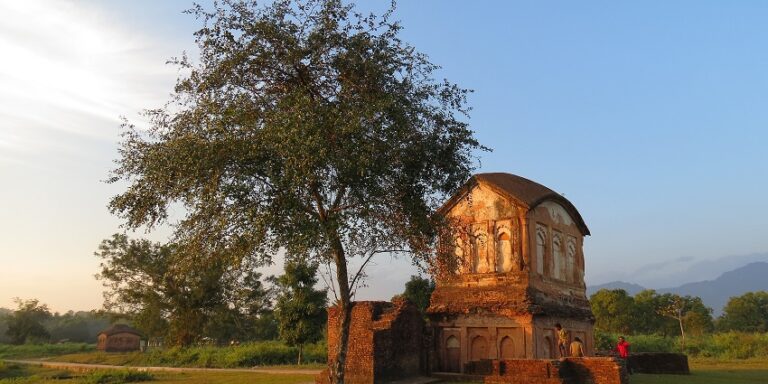
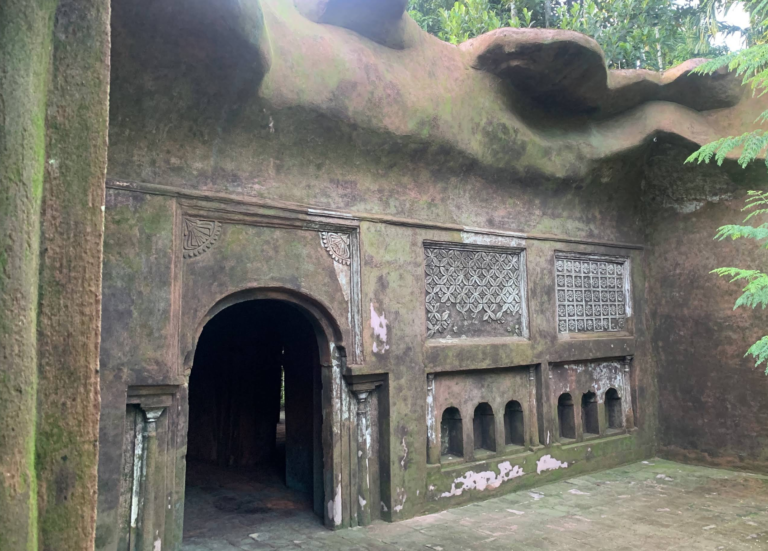
In the aftermath of this destruction, Pratapgarh was left deserted. Its people were killed, scattered, or forced to flee into the forests toward Junglebari. What had once been a center of political ambition and activity gradually faded into silence. Today, only fragments remain across the landscape of Karimganj—ruined fortifications, ancient water tanks, and scattered stone structures that stand as quiet witnesses to a lost past.
Source-